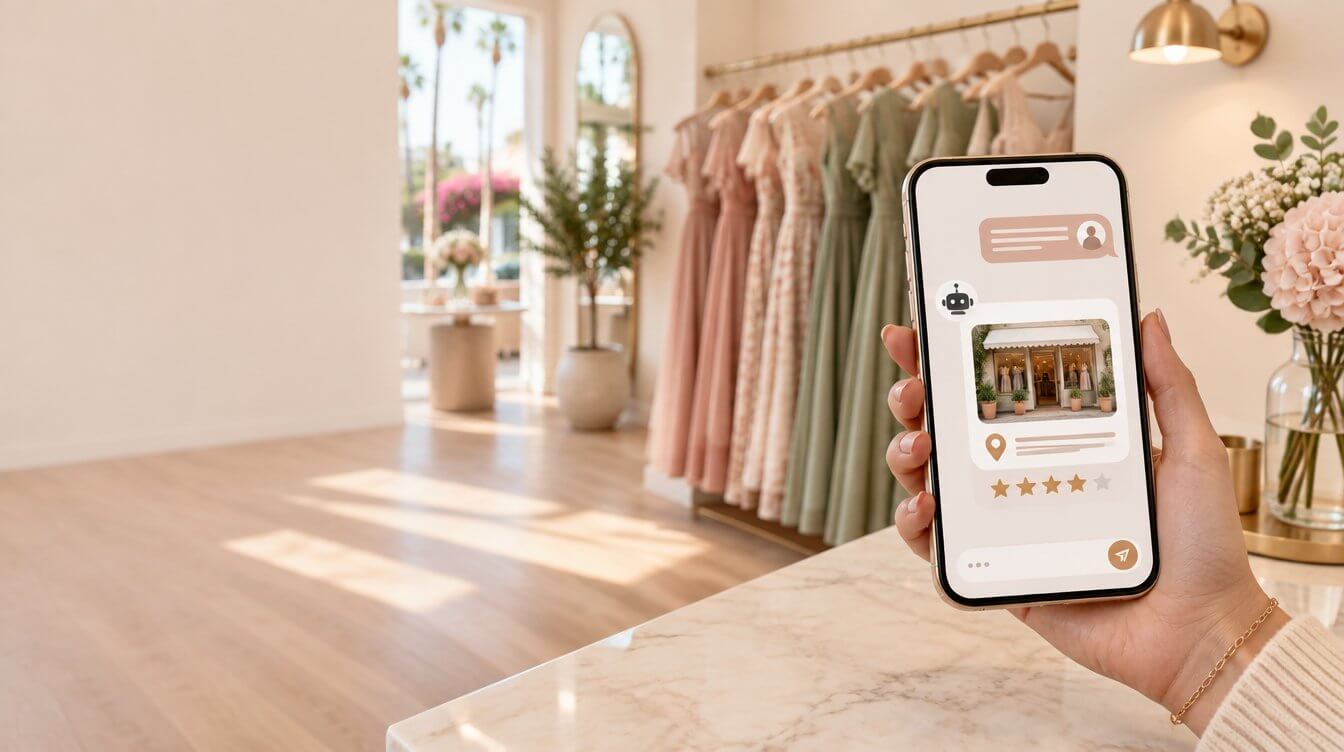
A shopper opens ChatGPT and types, “Where can I find a wedding guest dress near me?” If your boutique comes up, you want the address and hours to be right, and you want the description to sound like your store, not a generic guess.
OpenAI now gives you a way to check that. Its new Businesses in ChatGPT feature went into beta on November 10, 2026, and it lets eligible businesses claim a profile and manage it through something called Business Hub. If you’ve set up a Google Business Profile, the idea will feel familiar: you supply the details yourself, including products, prices and what’s in stock. (OpenAI’s announcement)
For a women’s boutique, that’s one more place a shopper can get a feel for your style, your selection and your services before she ever walks in. It’s a beta, so expect things to change. There’s still very little downside to claiming your listing now.
How to claim your boutique
Not every business can do this yet. Right now, local boutiques can claim an existing U.S. listing, and some online retailers will see an option to add a business.
- Sign in to ChatGPT and choose Business Hub from the sidebar.
- Search for your boutique by name, pick the correct listing and confirm which account will manage it.
- Verify that the business is yours. Depending on what’s offered, you can use your business phone, business email, website domain or Shopify store. You’ll either enter a code, add a DNS record or connect the store.
- Wait for an email from OpenAI. It will either approve you or ask for more information.
- Complete Persona verification. This is a separate identity check, and you can’t publish changes, connect product feeds or see insights until it’s done. Have your ID and business documents handy.
- Fill out your profile: website, description, category, logo, cover photo, and your delivery and return policies.
To be clear, claiming your listing doesn’t guarantee that ChatGPT will recommend you or show you more often. It means the information is yours to manage. The requirements are still moving, so check OpenAI’s official setup guide before you start.
Make your boutique easy for shoppers (and AI) to understand
A claimed profile helps, but your website still does a lot of the talking. Make it specific.
Say exactly what you are. Tell people where you are, who you dress and what you carry. “Women’s boutique in Pasadena specializing in contemporary clothing, occasion dresses and personal styling” tells a shopper something. “Fashion for every woman” doesn’t.
Give product pages real detail. List the brand, fabric, fit, sizes, colors, price and whether it’s in stock. Write those details out in text next to the photos. A photo can’t tell anyone that a dress runs small.
Answer the questions shoppers actually ask. Where do I park? Do I need an appointment? Do you do alterations? How do shipping and returns work? Then write guides around what you really stock, like how to pick a wedding guest dress or how to find denim that fits.
Keep your details the same everywhere. When your hours, locations or services change, update your website and your Google Business Profile together. Ask whoever runs your website about structured data that matches what’s visible on your pages. All of this helps with search in general, including Google’s AI features. (Google’s guidance) We covered the Google side of this in July, when Google put your Business Profile inside Gemini.
Make sure OpenAI’s crawler can get in. Ask your website provider to confirm that OAI-SearchBot can reach your public pages, both in your robots.txt settings and in any security tools on the site. (OpenAI’s crawler documentation)
If you sell online
Connect a product feed through Business Hub so your prices and stock stay current in ChatGPT. Once it’s running, the aggregated insights show you how shoppers find your boutique and what they do when they get there. (Businesses in ChatGPT)
If you only do one thing this week, claim the listing and make sure the address and hours are right. The rest can come after.
And if your product pages are thin because you’re short on time to write them, that’s usually a sign the buying is eating your week. Our wholesale buying service sources from hundreds of LA Fashion District brands for independent boutiques, and our digital solutions team handles AI search visibility for boutiques that want help with the rest.