Heels, Flats, and Hard Truths: Mastering the Art of Hiring and Firing in Retail
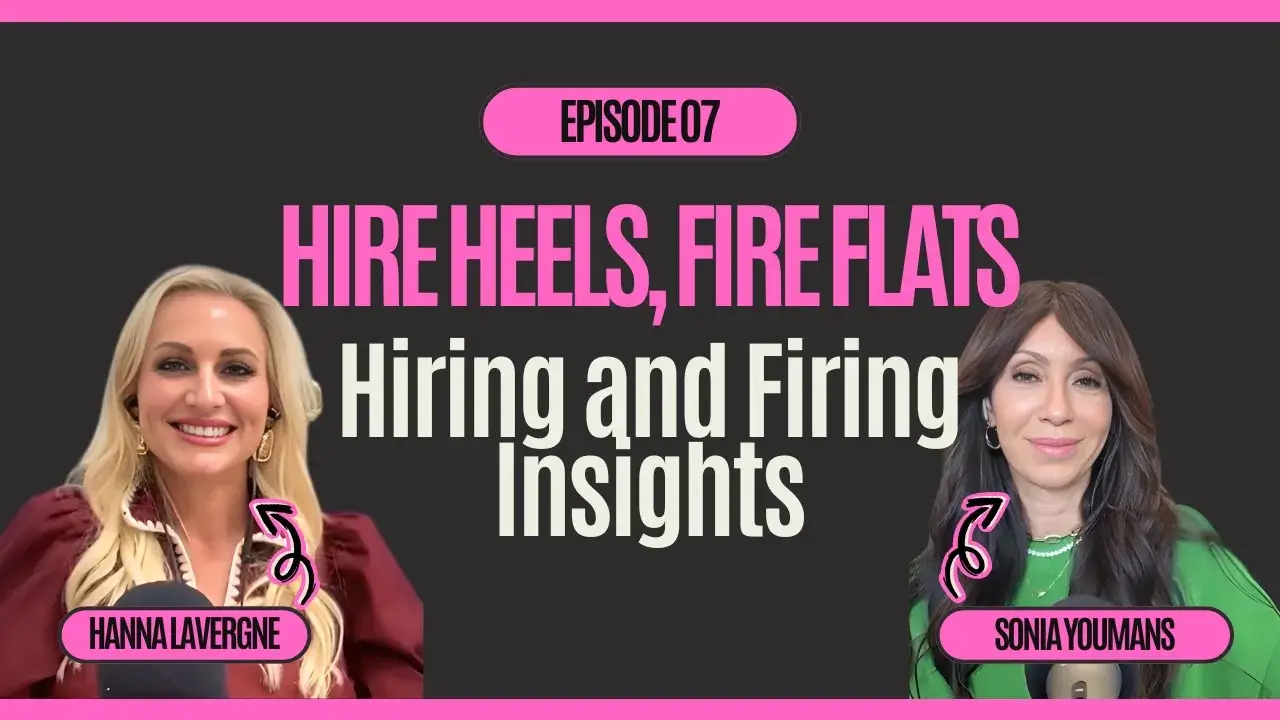
The business world, particularly retail, is a dynamic arena where success often hinges on finding the right people—and knowing when to let the wrong ones go. In a candid, behind-the-scenes look at running a boutique, business owners Sonia and Hannah from Boutique Hustle: Unzipped dive deep into the emotional, strategic, and often chaotic reality of human resources, aptly dubbing the conversation “Higher Heels and Fire Flats.”
This isn’t just about administrative tasks; it’s about gut feelings, company culture, and the non-negotiable traits that define long-term success.
💔 The Unavoidable Pain of Letting Go
Both Hannah and Sonia agree on one stark truth: letting an employee go is unequivocally the worst thing they have to do as business owners. This difficulty is compounded in the small business environment.
1. The Perils of Personal Relationships
For Hannah, who operates in small, close-knit communities, the line between personal and professional often blurs. The team naturally bonds, sharing deep secrets and becoming like family.
Hannah’s Experience: “We end up kind of bonding like family… it is hard especially when you know that they either aren’t the right fit or their time has just come to an end.”
This emotional investment leads to a common business mistake: keeping people way longer than they should due to the personal relationship.
2. The Instinctual Call to Action
The surest sign that a difficult conversation needs to happen is not a performance review, but a gut instinct.
- Sonia’s Opinion: Your gut never fails you. Managers who have done this for decades agree that the gut feeling is usually right at the very beginning, and the mistake is waiting too many weeks, too many months to act.
- The Procrastination Trap: Both admit to severe procrastination, often finding excuses to delay the firing—waiting until Friday, running out of time, or, as Hannah confesses, calling an employee in to fire them only to change the subject and tell them they are doing great.
If you feel it in your stomach, it’s time to “pull the trigger.”
🚧 The Chaos of the Transition Period
When a necessary firing happens, the transition is rarely smooth. For Sonia, who deals with complex vendor relationships, the immediate practical burden is immense.
- The Workflow Drain: Whatever the former employee handled immediately falls on Sonia, often when she’s already “tapped out,” naturally leading to further procrastination.
- Vendor Management Nightmare: The firing process is not seamless because Sonia must manually inform numerous vendors that their contact person has changed. As mass emails are often ignored, this adds a significant, immediate workload.
- A Small Town Advantage: Ironically, Sonia notes that news travels fast in their area, which can sometimes help by spreading the word about an opening or a departure.
⏳ Training: Why You Can’t Just Hand Over a Manual
For boutique businesses, training is a commitment to a long, messy, and ongoing process.
- On-the-Job Learning: Hannah confirms there is no comprehensive manual—only basic “bullet points, dos and don’ts.” The training philosophy is to “throw you to the fire” and teach through immediate action.
- The Lengthy Curve: Due to the many layers of the job, including different clients and customized processes (“every client works differently”), training is extensive:
- Hannah is currently still training an employee who has been with the company for nine months.
- She recalls a long-time employee, Cindy (18-19 years with the company), who took two to three years to be fully independent.
- “Managing Chaos”: Hannah’s husband accurately sums up the business environment: nothing is ever the same, and the owner’s primary job is often to “manage chaos.”
🛑 The Non-Negotiable Traits: Personality and Adaptability
When selecting new hires, two traits emerge as absolute non-negotiables for success in retail.
1. The Need for Adaptability and Growth
Hannah identifies the single biggest reason employees reach the end of their road: a resistance to change.
- The retail industry is “ever-changing” (fashions, seasons, systems). To grow, team members must be “willing to be a sponge” and grow with the company.
- When an employee becomes overwhelmed or stagnant due to change, it is a signal that it’s time for them to go, as they are not equipped or mature enough for the constant evolution required.
2. Personality is Not Trainable
For Sales Associates, Hannah’s absolute non-negotiable is personality.
Hannah’s Stance: “I can’t train personality. I can train task. I can train a lot of other things [and] system but I cannot train somebody’s personality.”
Personality is what creates the brand identity and the bubbly, energetic atmosphere customers expect.
The COVID Generation Challenge
Hannah notes that finding this personality has become a “true struggle,” particularly with the younger generation (18-22) who were “COVID majors.” This generation, who spent formative years without typical structure and in isolation, often lack the charisma and personality required for a customer-facing role.
🛡️ Protecting Your Culture from Toxic Energy
The presence of toxic employees—described as “cancer”—can destroy a company’s culture.
- The Seasoned Staff Challenge: Existing, “seasoned” employees often struggle to adapt to new hires or management, leading to cultural shifts. Sonia shares an experience where a veteran employee’s constant complaining about a new hire eventually exposed that the veteran was the problem, feeling insecure and threatened.
- The End Result: This conflict creates toxic energy that must be addressed immediately. Hannah shares a management success story where an unnamed manager, despite “going through the ringer” with veteran staff, prevailed due to her determined personality and refusal to let her “emotional framework” be dictated by others.
🎯 Hiring Smarter: The Avatar System
To ensure a perfect match between staff and brand, Hannah’s company, Herring Stones, uses a sophisticated Avatar System for both consumers and stylists.
1. The Customer Avatars
The Avatars are built around their top 20% of clientele (who pay 80% of the bills).
| Customer Avatar Name | Focus & Behavior | Stylist Requirement |
|---|---|---|
| ITG Girl | Fast-paced, needs quick styling (10 minutes) for events/happy hour. | Sophia must be confident, fast-paced, and charismatic. |
| Bougie Bestie | Views shopping as retail therapy (1-3 hours), prioritizing connection and hanging out. | Requires a stylist who can prioritize rapport and patient service. |
| Savvy Shopper | Lives like an ITG Girl but seeks discounts/clearance. | Needs the full service experience despite their budget focus. |
2. The Stylist Avatars
This system ensures that employees are hired based on their ability to connect with a specific customer type. For instance, a stylist who lacks the “extra confidence” to speak to the high-energy ITG Girl would be better placed to serve a different, less overwhelming customer category. This detailed approach dictates how they hire and why they fire.
💥 The Final Non-Negotiables: Hard Work and Accountability
Beyond personality, two traits prove indispensable for any hire.
1. Hard Worker (Sonia’s Perspective)
For her own business, which involves physical labor, running errands, and working under extreme conditions (“rain, dine, wind, 110 degrees,” or even through “ashes” from fires), Sonia’s non-negotiable is finding a hard worker. She looks for these signs in an interview:
- Team Language: Speaking in “we” instead of excessive “I, I, I.”
- Preparation: Asking questions and taking notes—showing genuine interest.
2. Ownership and Accountability (Both)
The final, crucial trait is the employee’s willingness to take ownership when a mistake is made and demonstrate accountability.
- No Excuses: Both owners cannot tolerate employees who point fingers at vendors or give excuses (“They didn’t get back to me”).
- The Client’s View: The responsibility is always the company’s. As Sonia puts it, even if a vendor is at fault, “it’s our fault to go fix it.”
✅ Smart Strategies for Minimizing Pain
To combat the inherent difficulty of firing, smart systems are essential:
- The Trial Period: Implement a 60- or 90-day trial period (Hannah uses a 30/60/90 structure with written SOPs) to establish clear expectations. This creates a natural opportunity to part ways if expectations are not met.
- Keep it Short: The firing conversation does not need to be long. As Sonia advises, a brief, direct message is best: “Thank you for your time. Unfortunately, things are not working out… I wish you the best.”
- The Positive Perspective: Ultimately, keeping an ill-fitting employee is holding them back. By letting them go, you allow them to find a better, more suitable opportunity elsewhere.
The moral of the story for all business owners is clear: nip it in the bud. Listen to your gut, act swiftly, and focus on building a culture defined by adaptive, hard-working, and accountable individuals.